Scrape
One pass collects the technical record and the content itself.
One pass collects the technical record and the content itself.
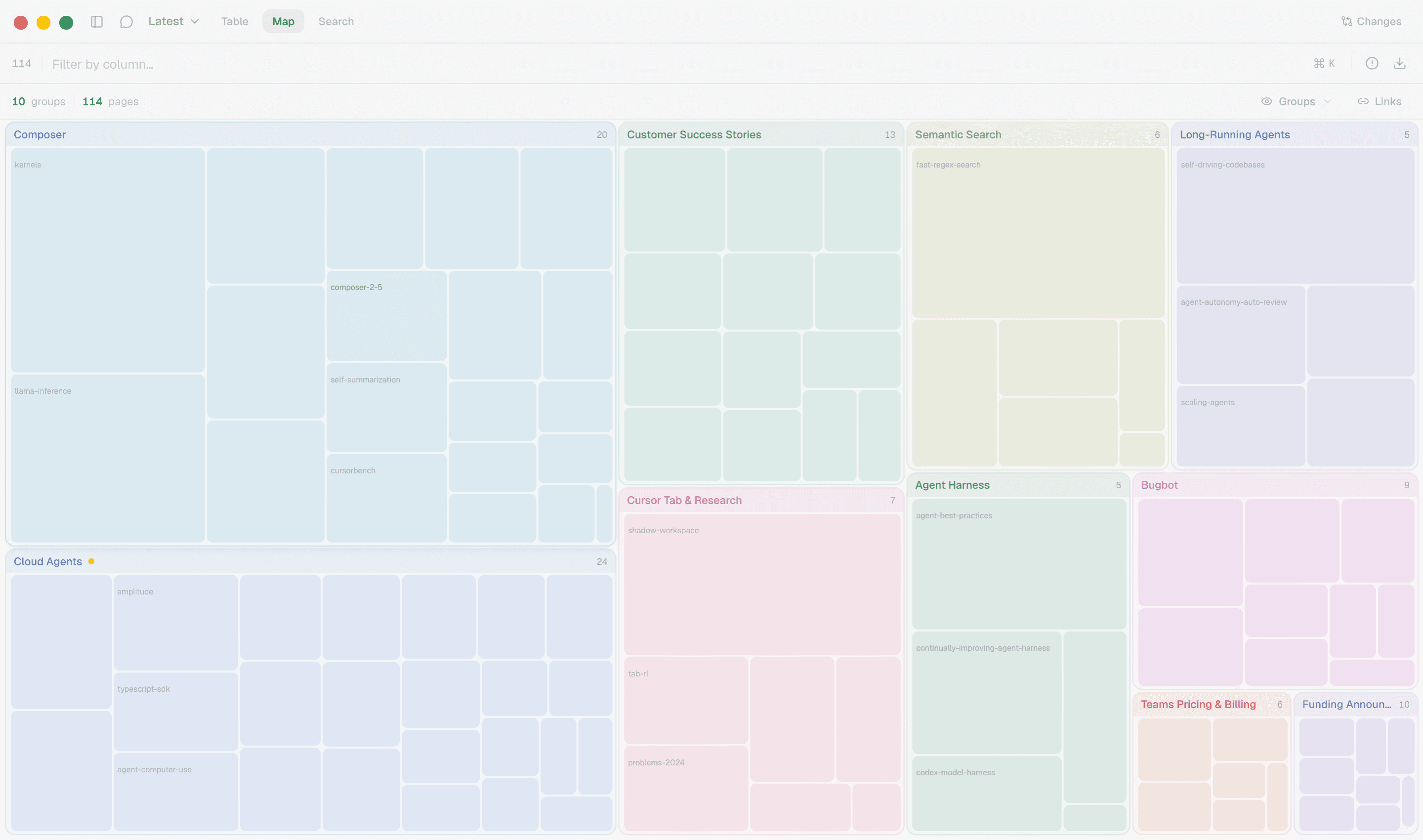
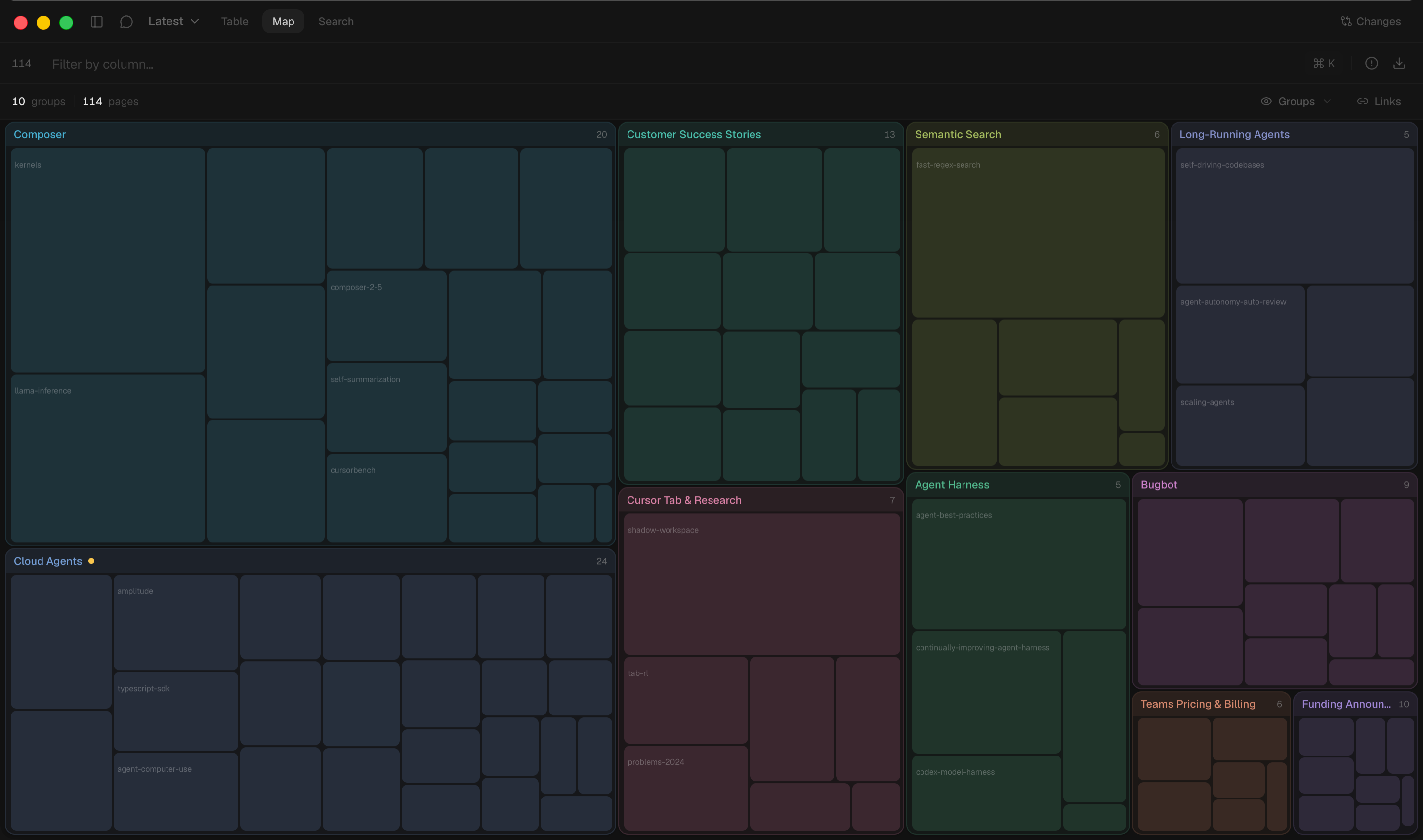
A built-in model maps every page by meaning as it lands.
The crawl becomes a workspace you and your agents can query.
Every URL lands with its technical record and the page itself. The crawl doesn't end as a spreadsheet — it becomes a workspace you can query.
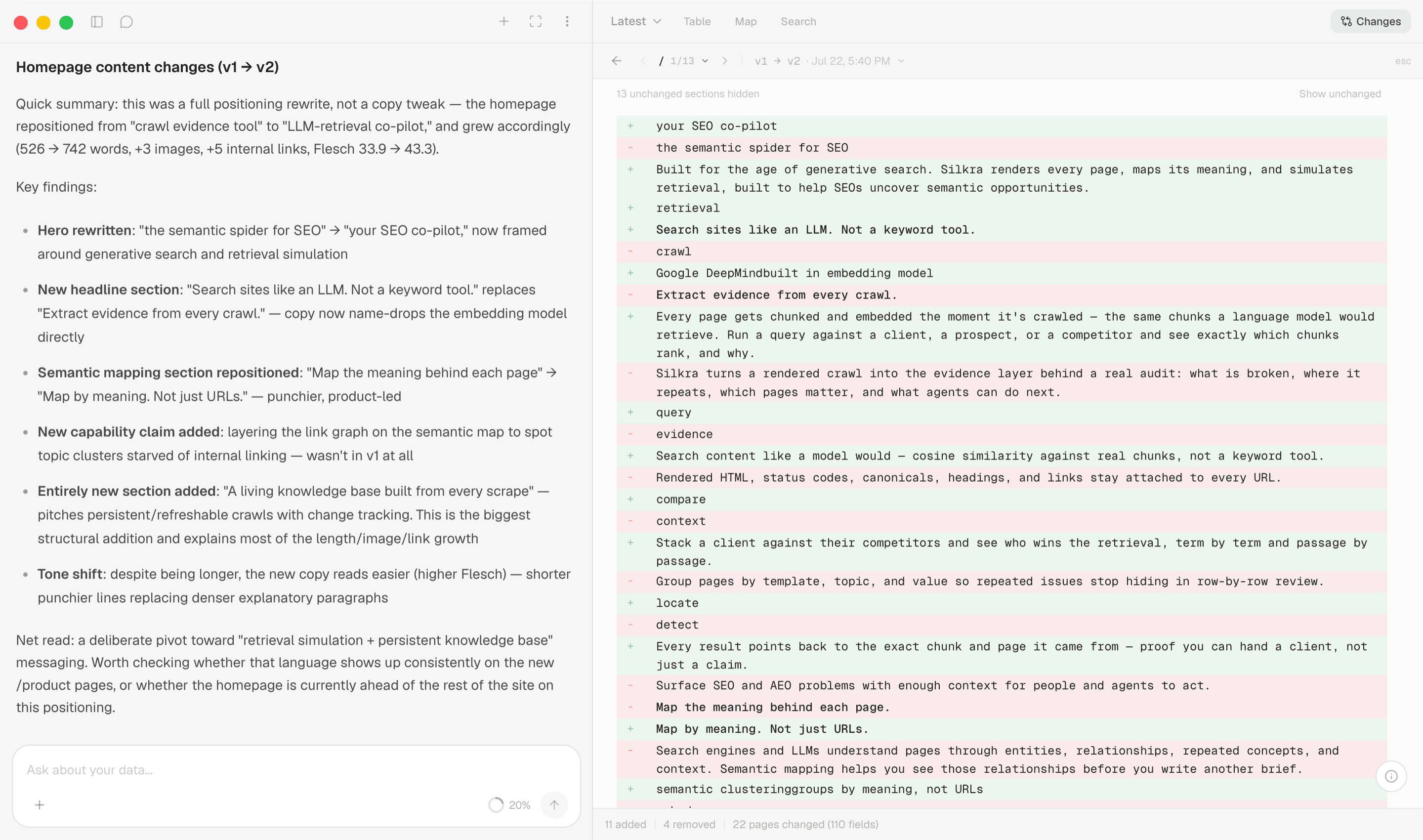
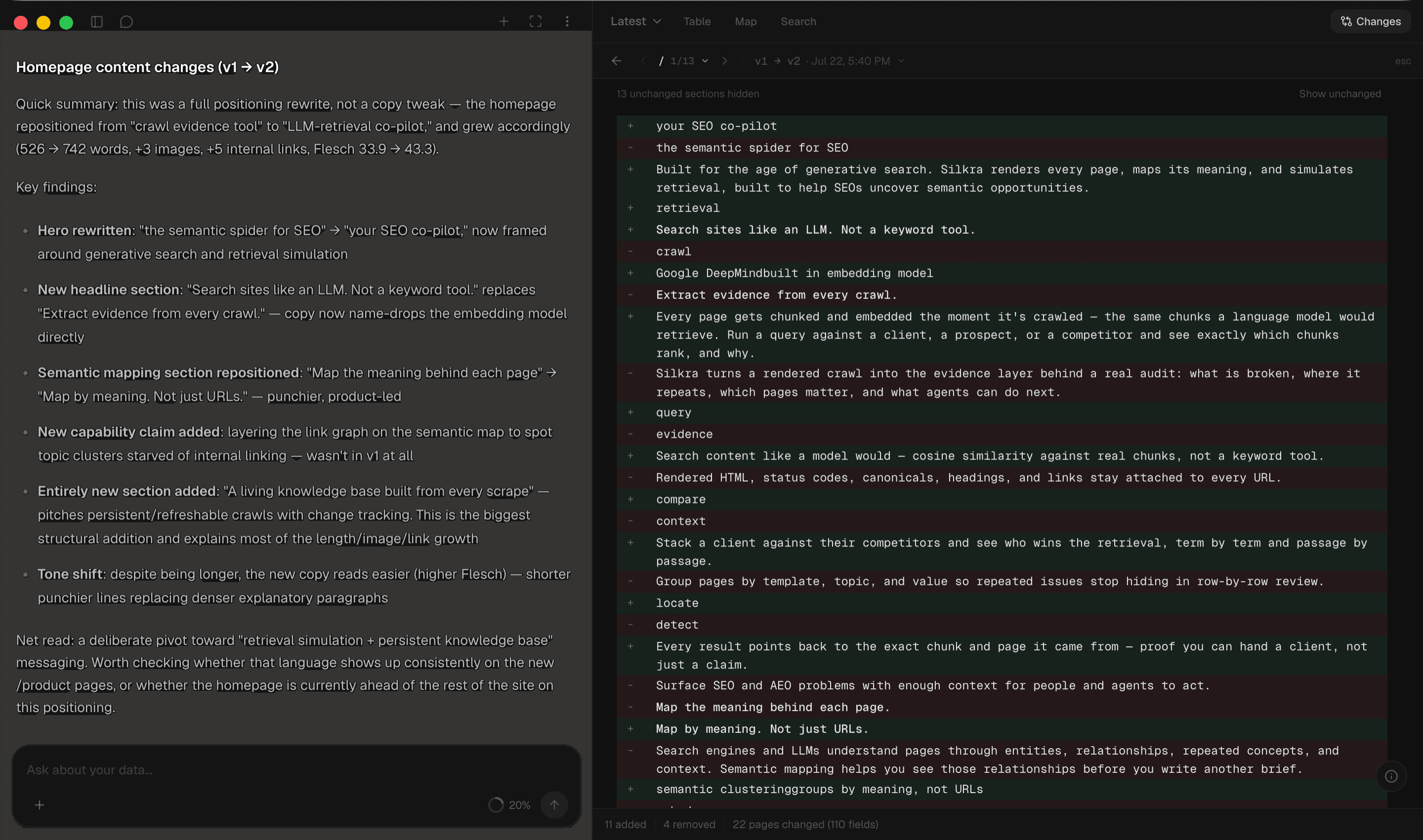
A built-in embedding model maps pages by what they say, not their URL. No API keys — the semantic layer is part of the scrape.
Titles, descriptions, canonicals, status codes, directives — the same technical record a traditional crawler gives you.
Every internal link, kept as a graph you can trace — how pages reference each other, and where the orphans are.
Every page's content is embedded as it's collected, so the crawl arrives already mapped by meaning.
HTML is transformed into clean Markdown, so agents read your pages the way they read everything else.
Tables, code blocks, and quotes are stored as first-class evidence — the pieces LLMs lift when they answer.
How well each page is organized for retrieval — the raw material for diving into LLM optimization work.
Example questions include: Show me internal linking opportunities, Audit this site, Where should I start?, Find pages competing for the same intent, What changed since the last crawl?.
Crawl a site, then ask what needs attention.
free to start