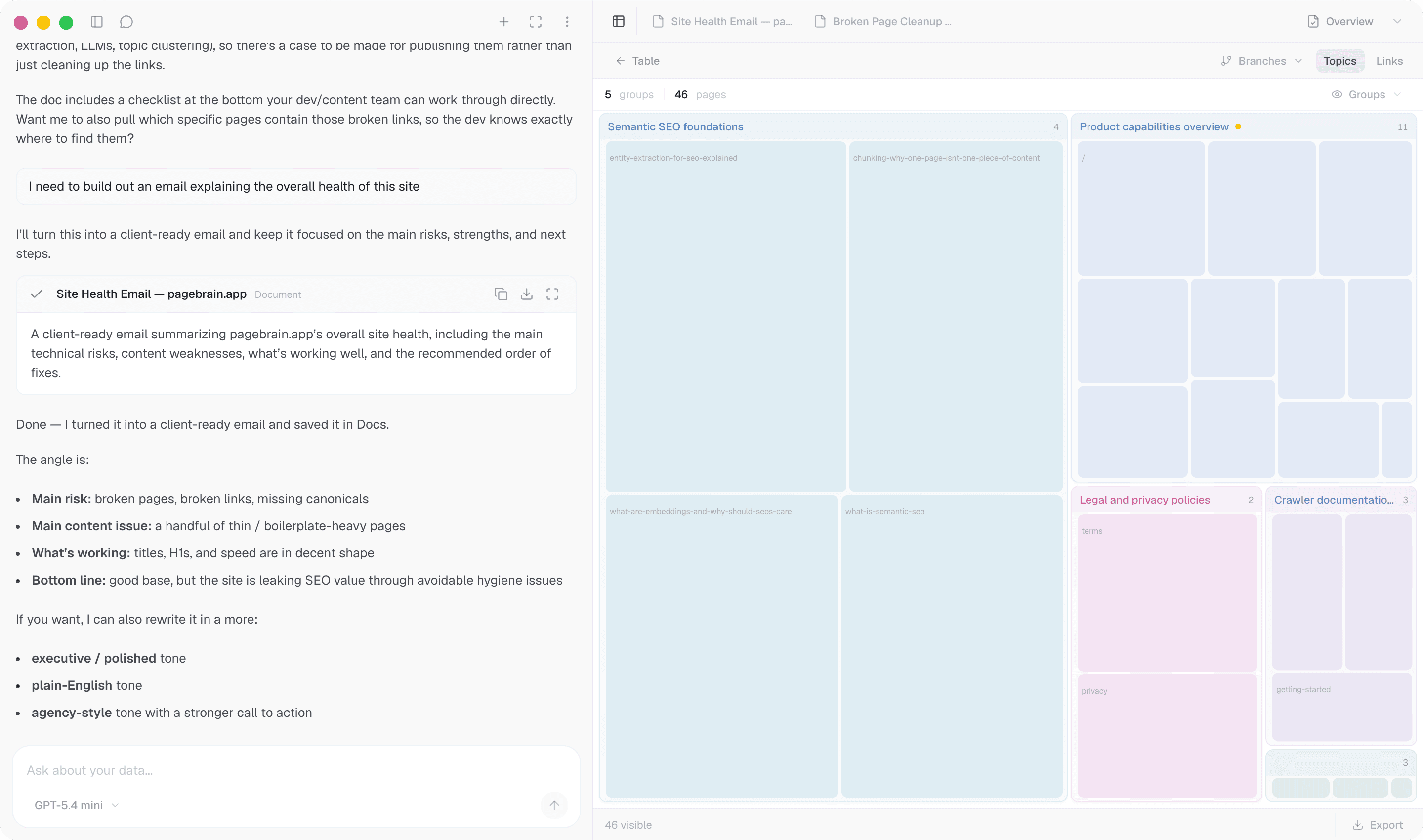
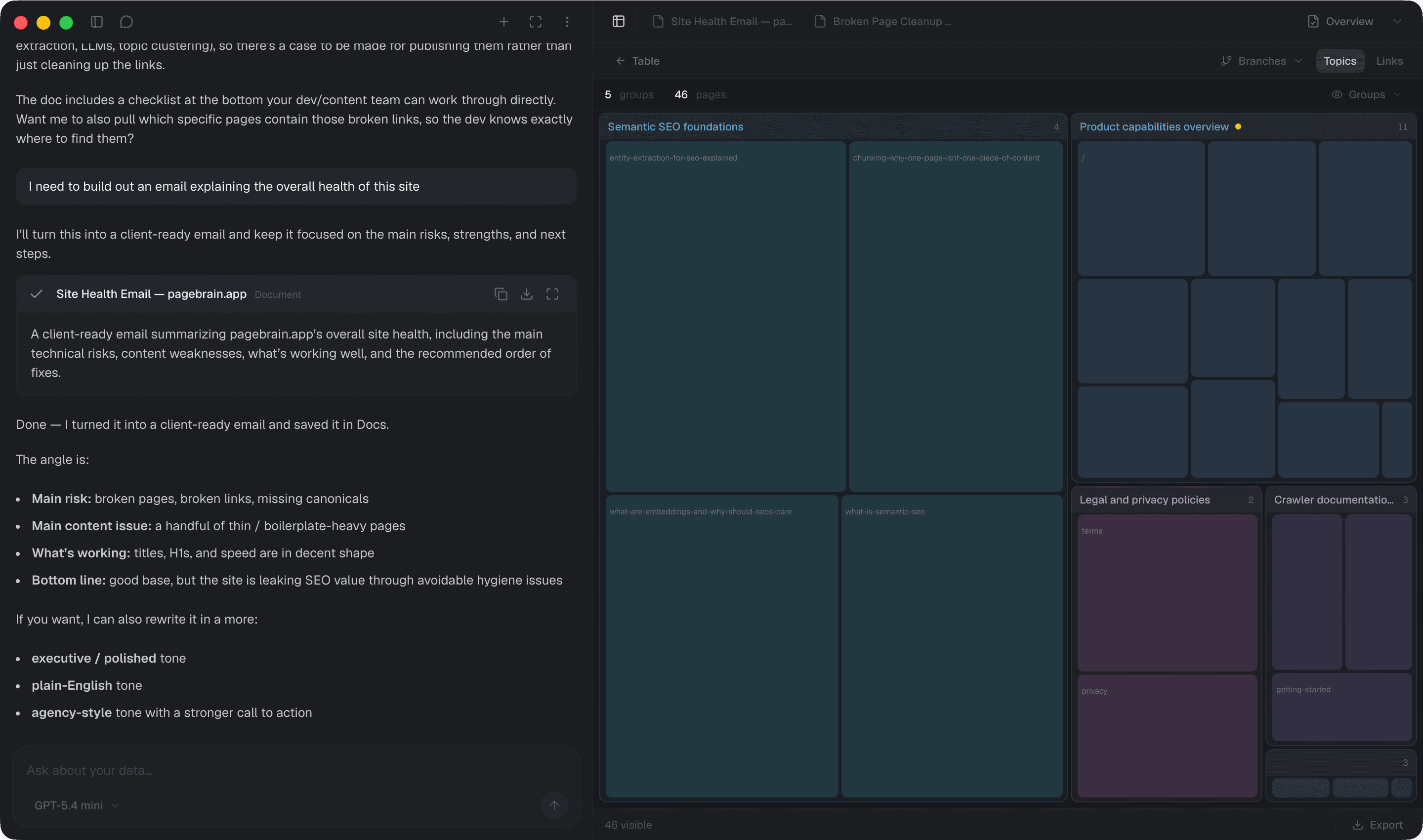
Group pages by what they say
Cluster by embedding so pages sit together because they mean the same thing, not because they share a folder.
Most internal linking work starts from the links you already have. It cannot tell you that two pages are a few degrees apart in meaning and have no path between them — usually the cheapest win on the site.
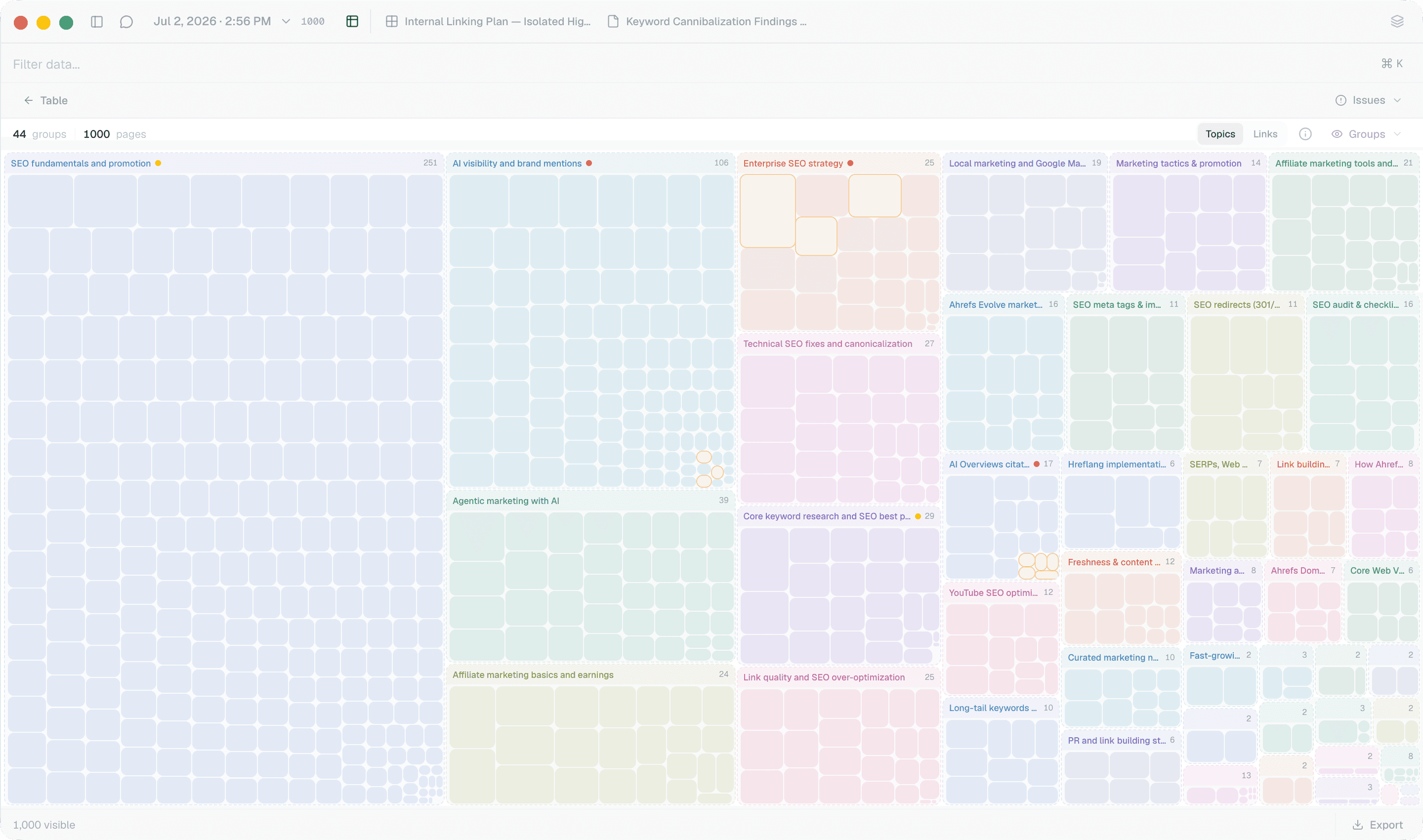

Cluster by embedding so pages sit together because they mean the same thing, not because they share a folder.
Filter for pages that are semantically close and unconnected — the missing edges this site actually needs.
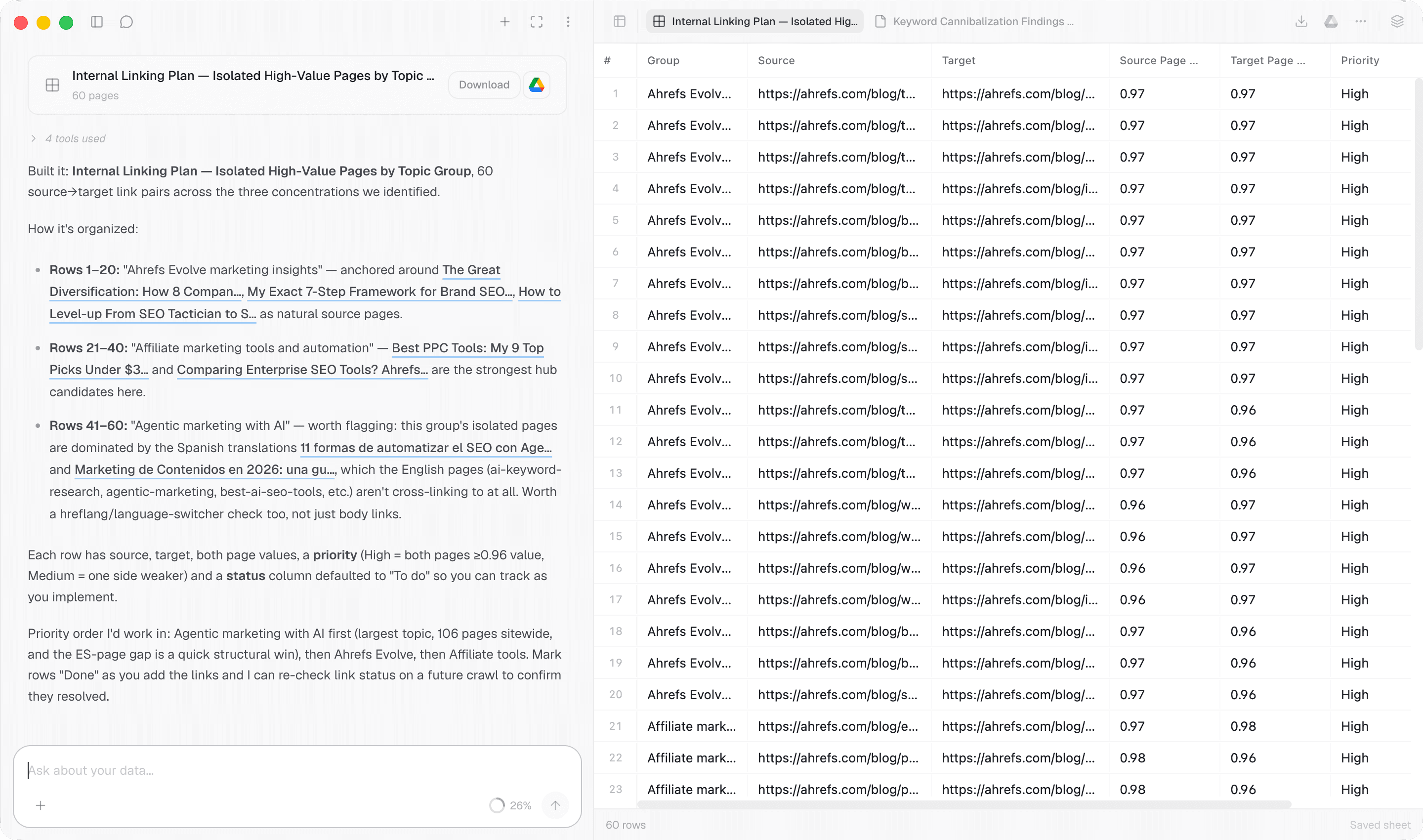
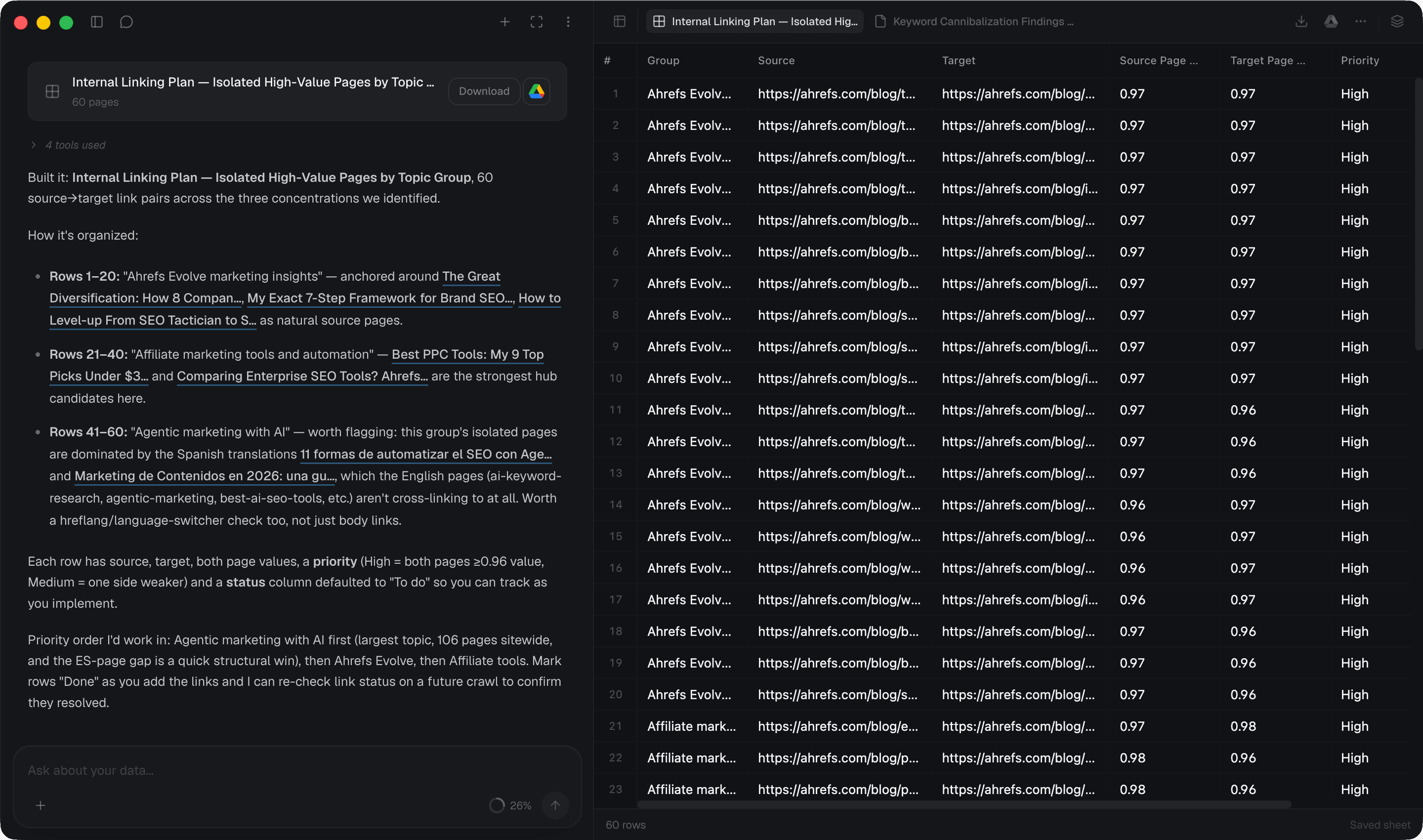
Export source and target URLs as a sheet, with the passages that justified each link still attached.
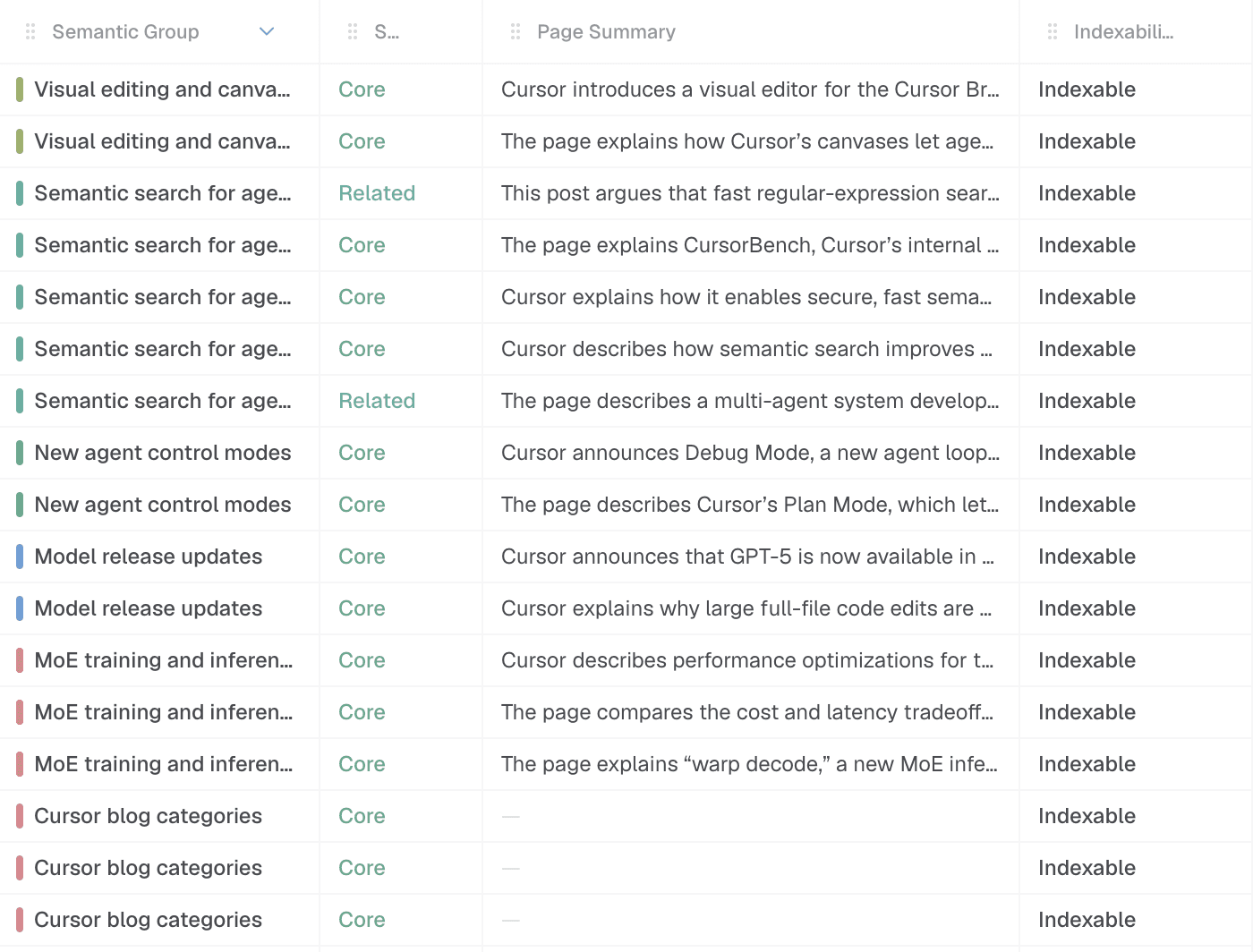
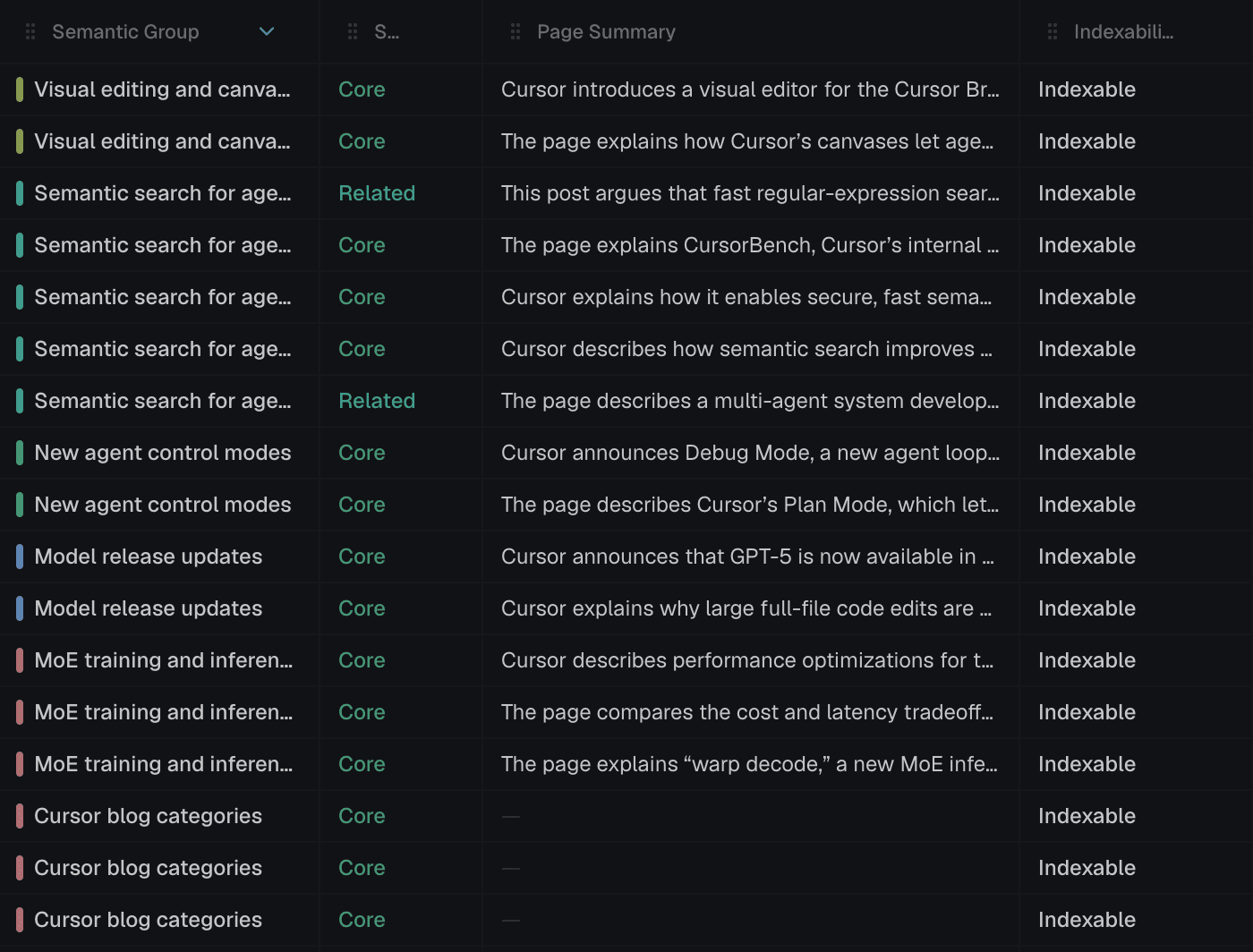
Represent page content as searchable meaning, even when URLs do not share the same keywords.
Compare what links to what with how closely the two pages actually relate.
Find pages that are close in meaning but poorly connected, then turn those pairs into work.
Spot clusters where several URLs compete for one answer and decide what to merge or differentiate.
Lay current internal links on the map so the missing edges are specific, not a generic “link more.”
See where a subject is well supported, where coverage is thin, and which groups should carry authority.
Write linking recommendations that point back to the pages and passages that justify them.
Low-substance URLs and two pages competing for one intent, flagged by similarity.
See how brands, products, and repeated concepts show up across templates and clusters.
Crawl, chunk, and embed any site on your machine, then hand your agents the passages and page evidence behind every answer.
free to start