Group the issue, not the URL
Roll the same missing description into one template problem instead of four thousand rows.
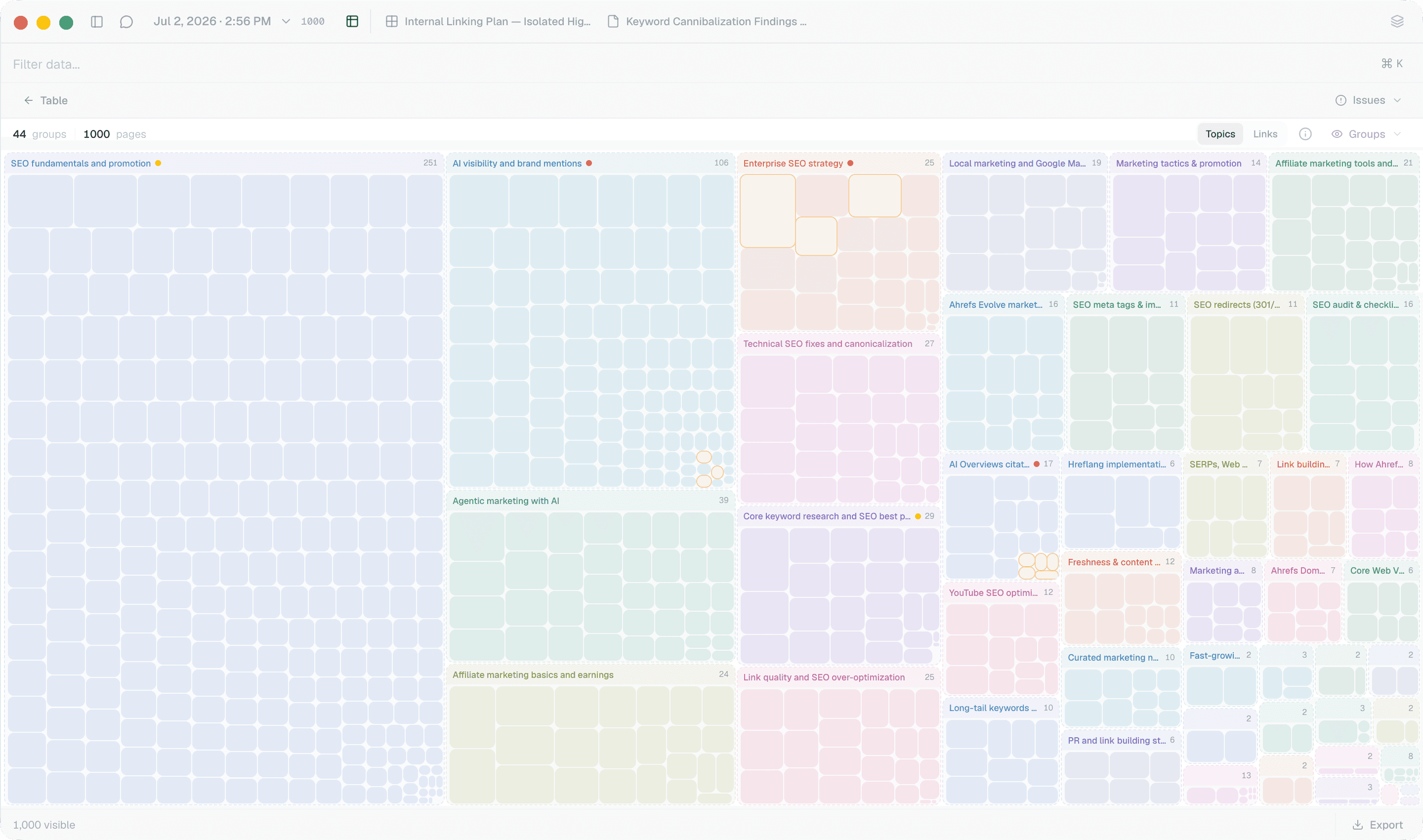
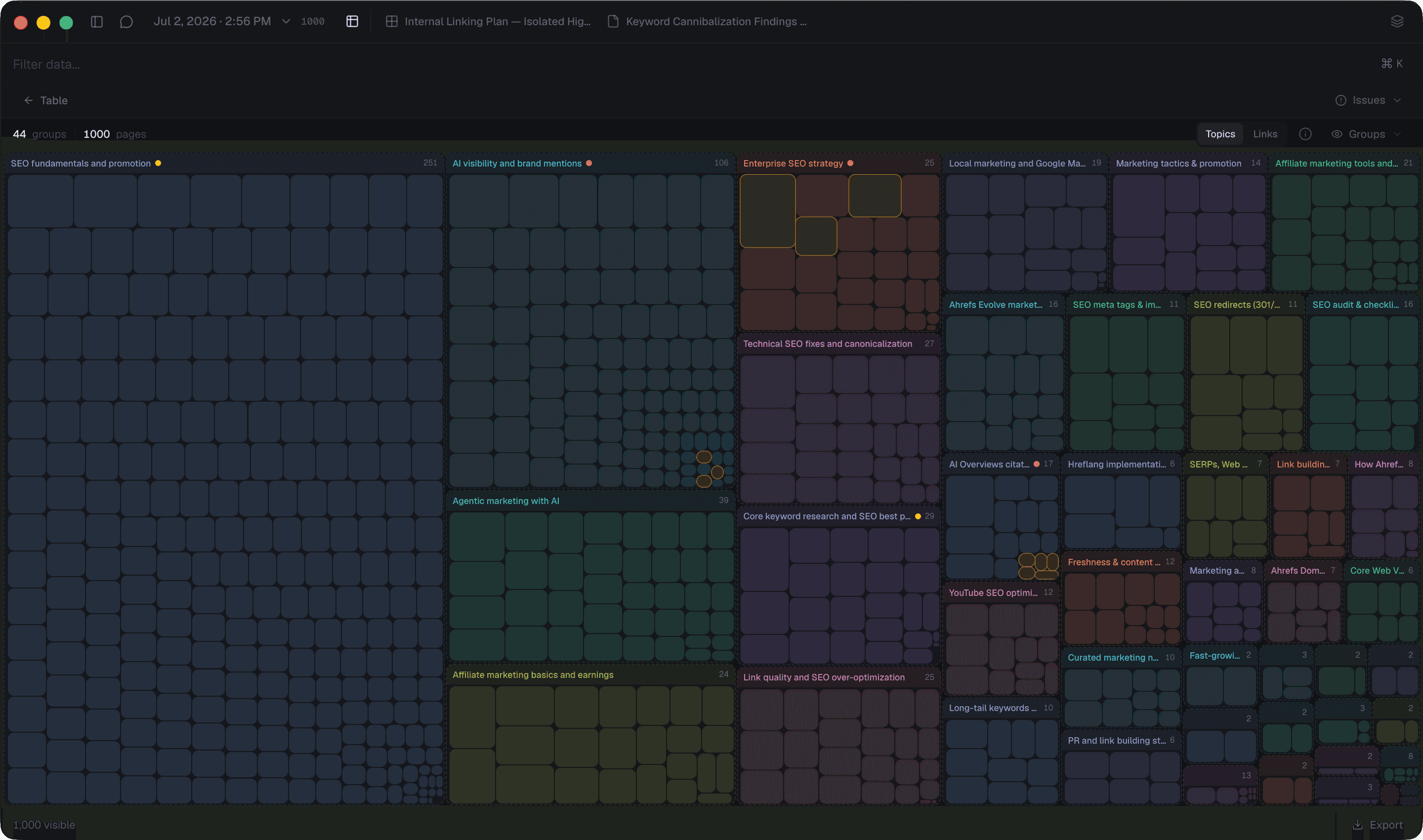
Technical SEO work usually starts with a crawl and stalls at the export — thousands of rows, a dozen issue types, and no clear read on which of them are costing you anything.
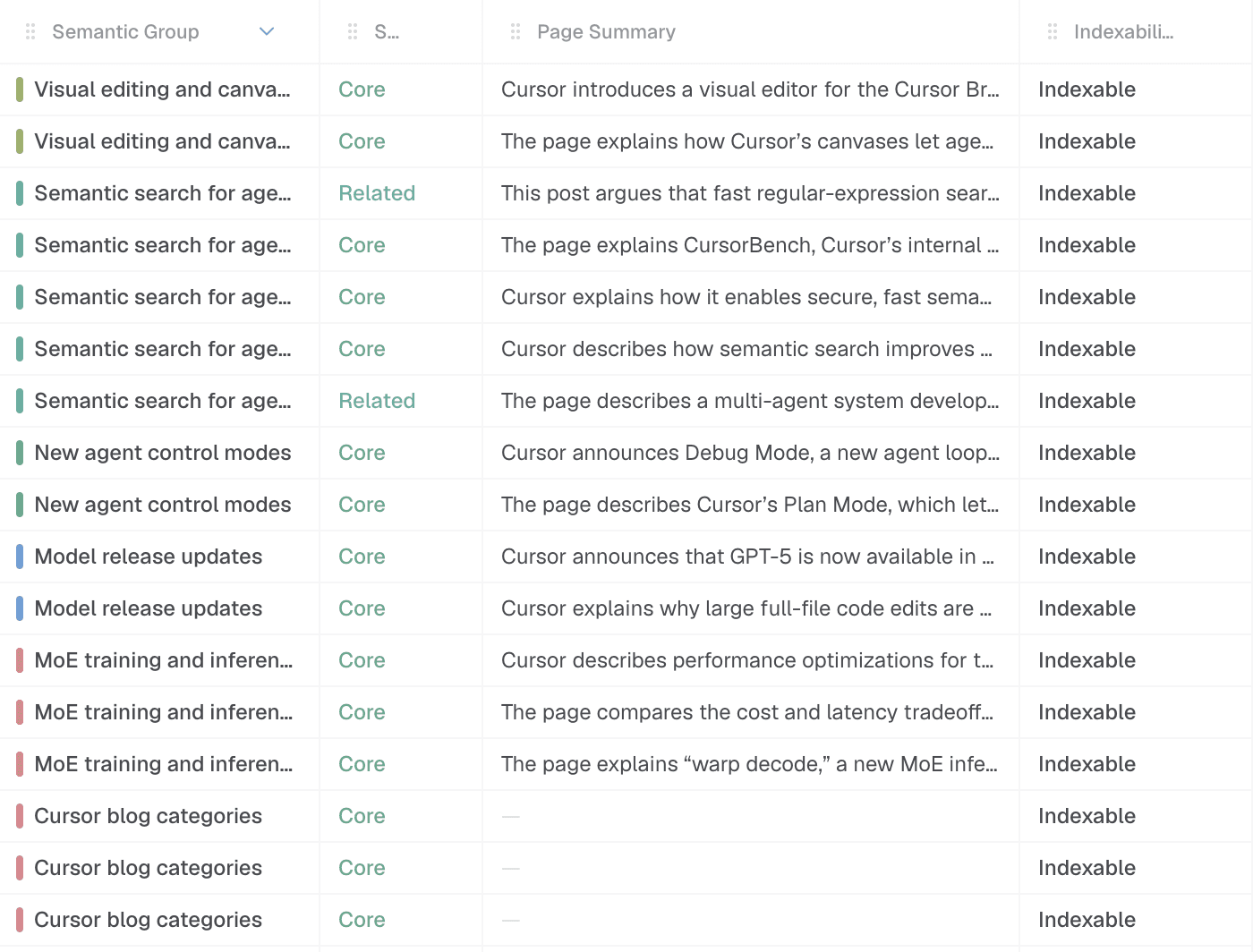
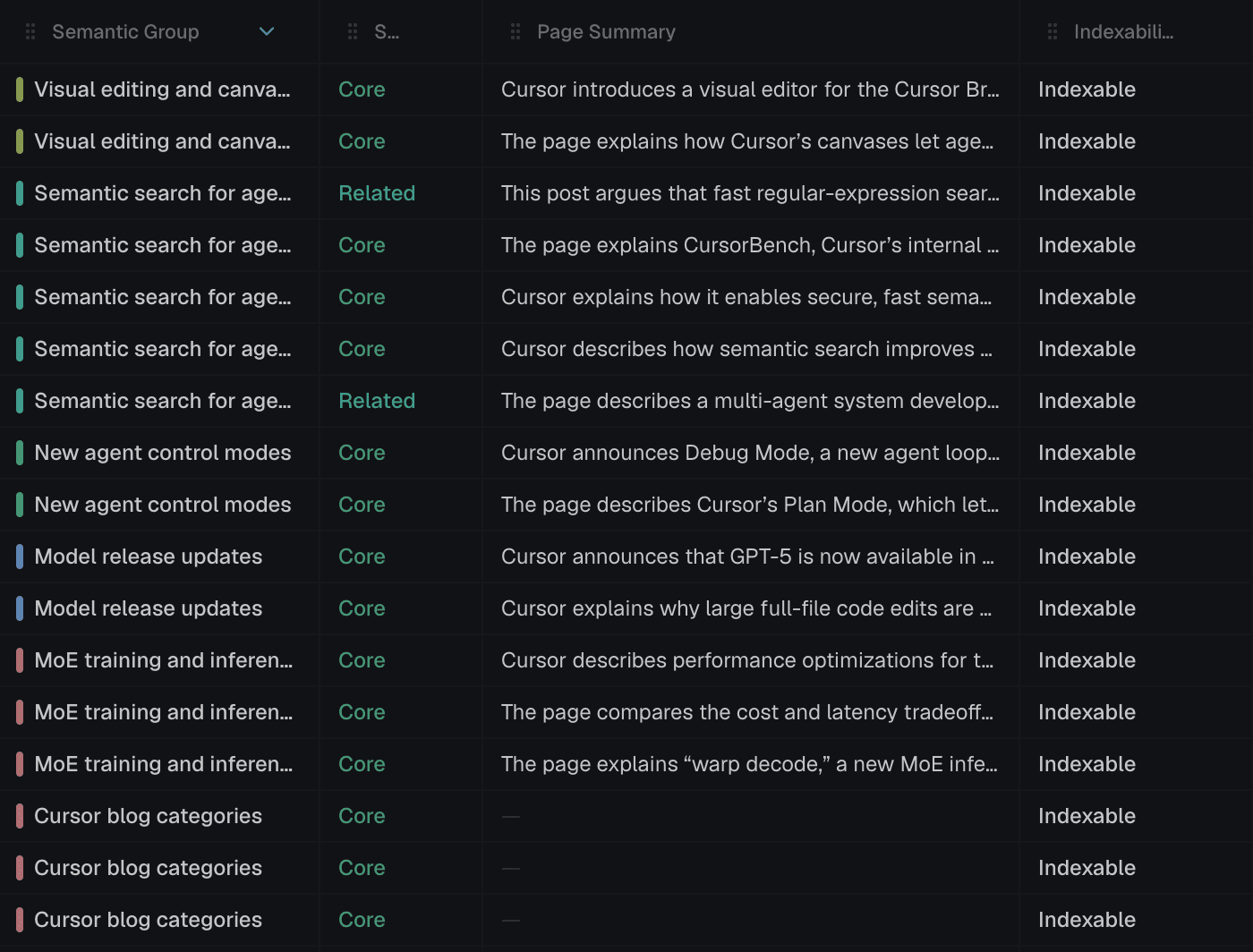
Roll the same missing description into one template problem instead of four thousand rows.
Order work by page value and link reach, not by how many times the issue appears.
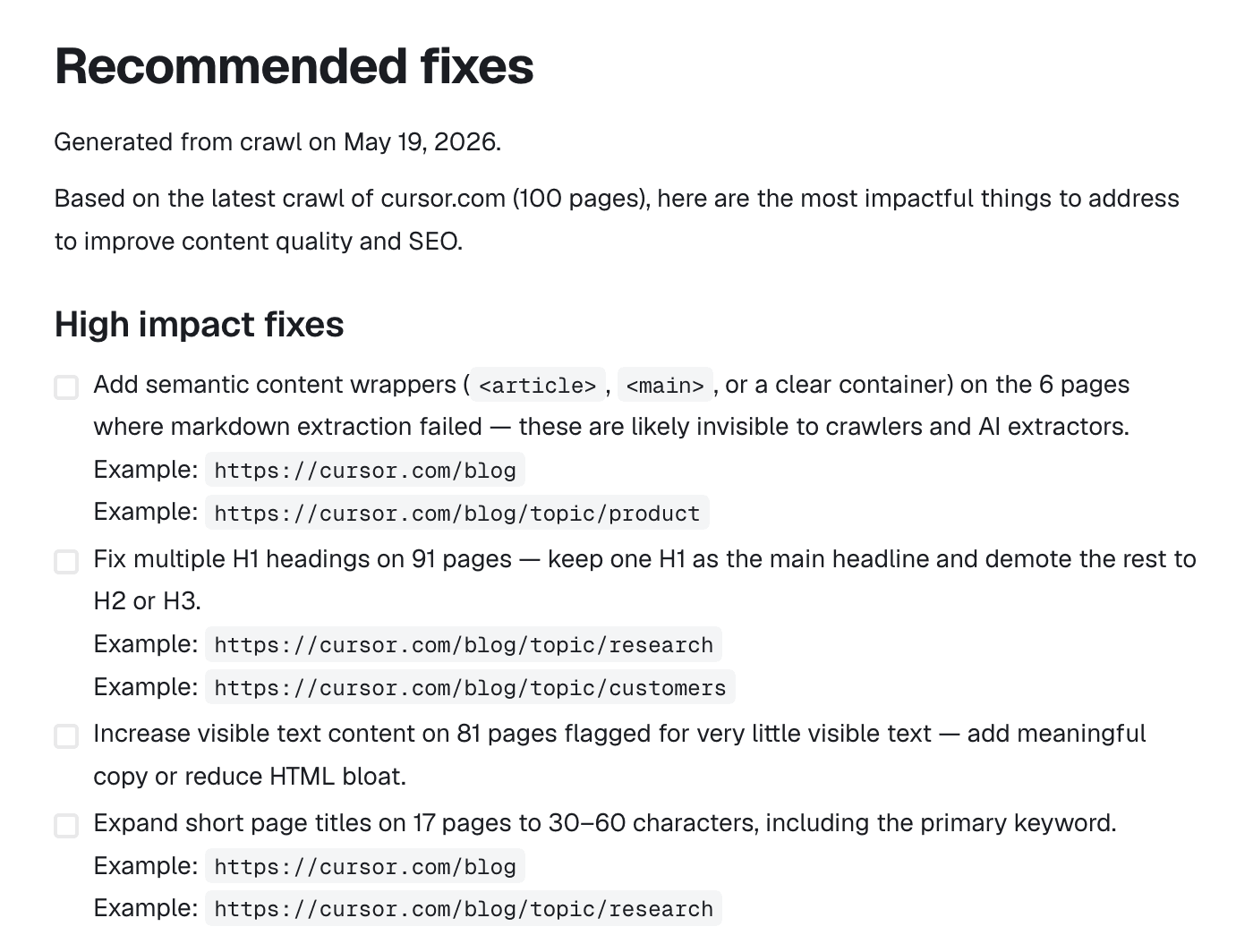
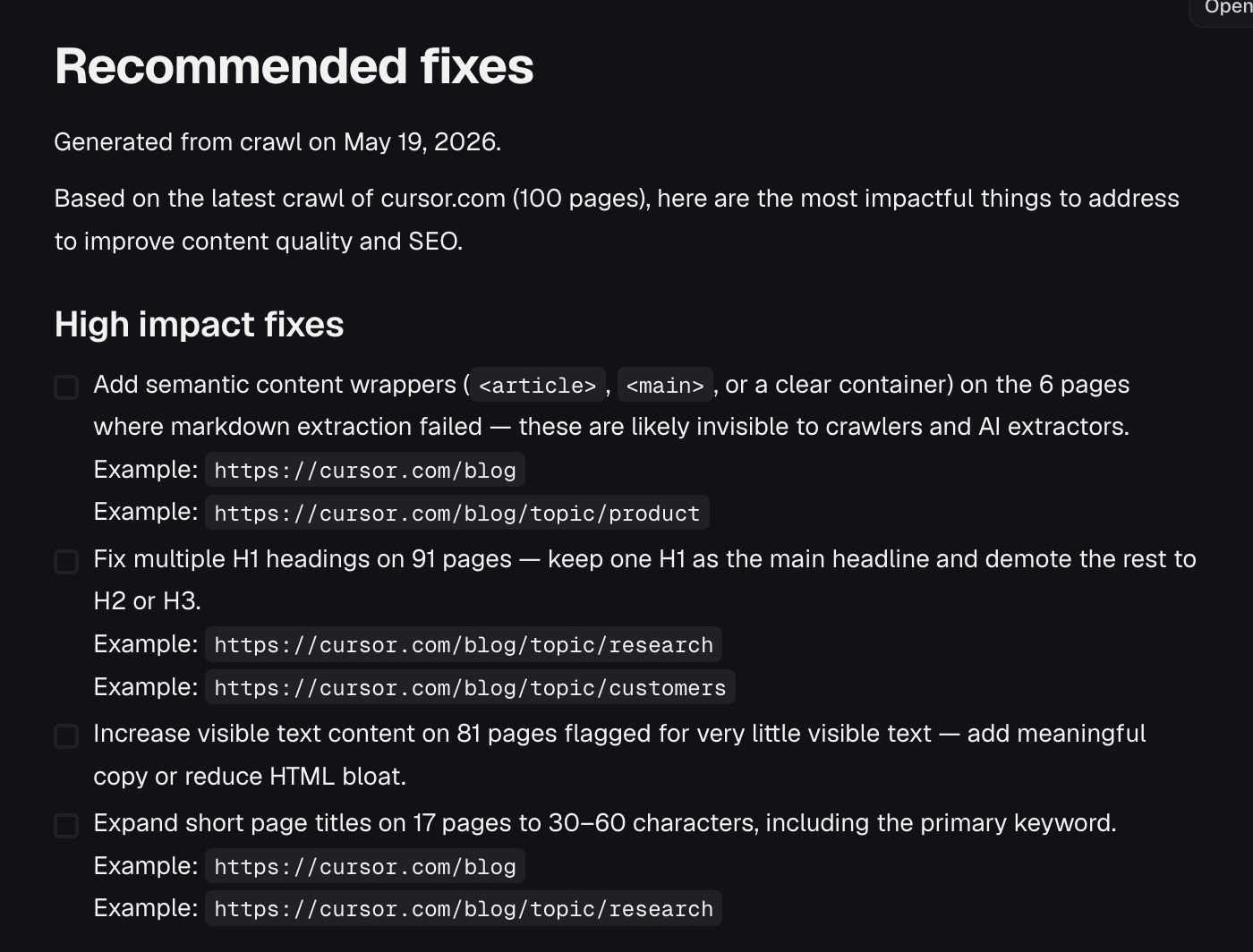
Every finding stays attached to the crawl, so notes and briefs can cite the page they came from.
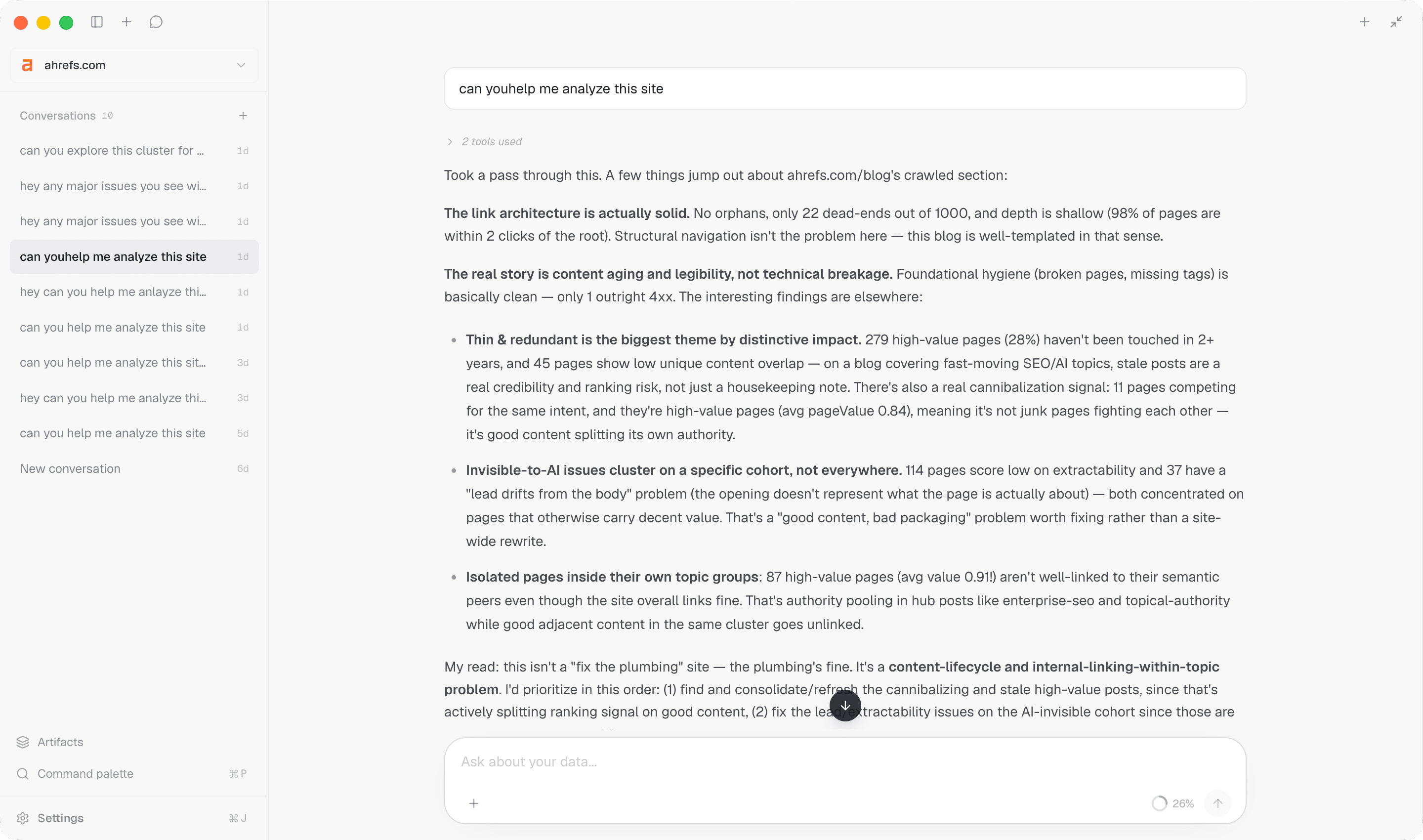
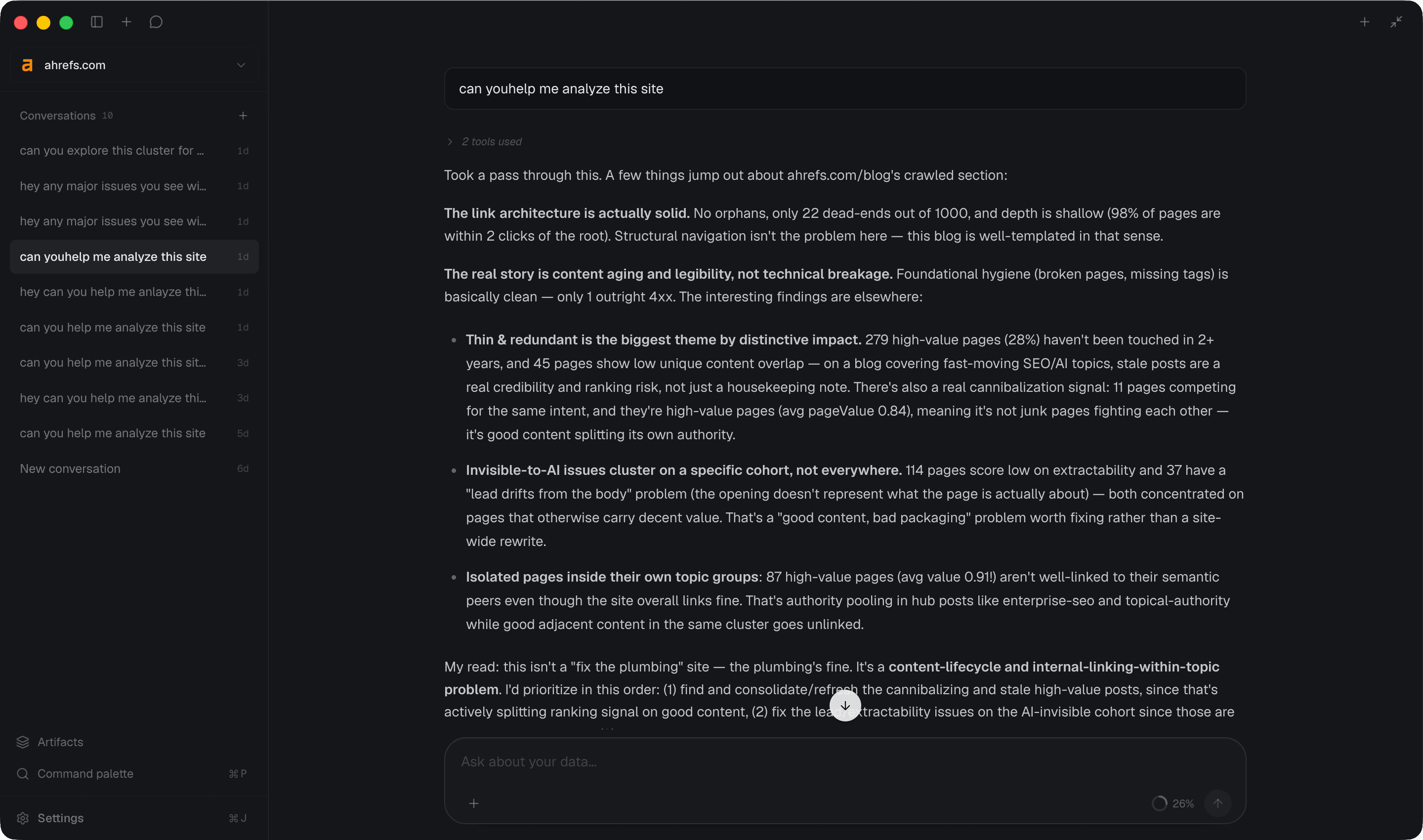
Keep rendered HTML, headings, canonicals, status codes, and links attached to every URL.
Roll repeated issues up by template, directory, and topic instead of treating every URL as unique.
Sort findings by the pages they touch instead of by raw issue counts.
See how technical issues connect to page meaning and the evidence agents need to answer from the site.
Find clusters of pages around the same subject so issues sit next to coverage and intent.
Move from investigation to notes and recommendations with page-level proof on every claim.
Give AI workflows crawl context they can query without pasting fragments from another export.
Fix the template once rather than walking nine hundred URLs one row at a time.
Re-scrape and keep first-seen and content-changed history on every page.
Crawl, chunk, and embed any site on your machine, then hand your agents the passages and page evidence behind every answer.
free to start